Seeing Double: Testing the Canon VR Lens
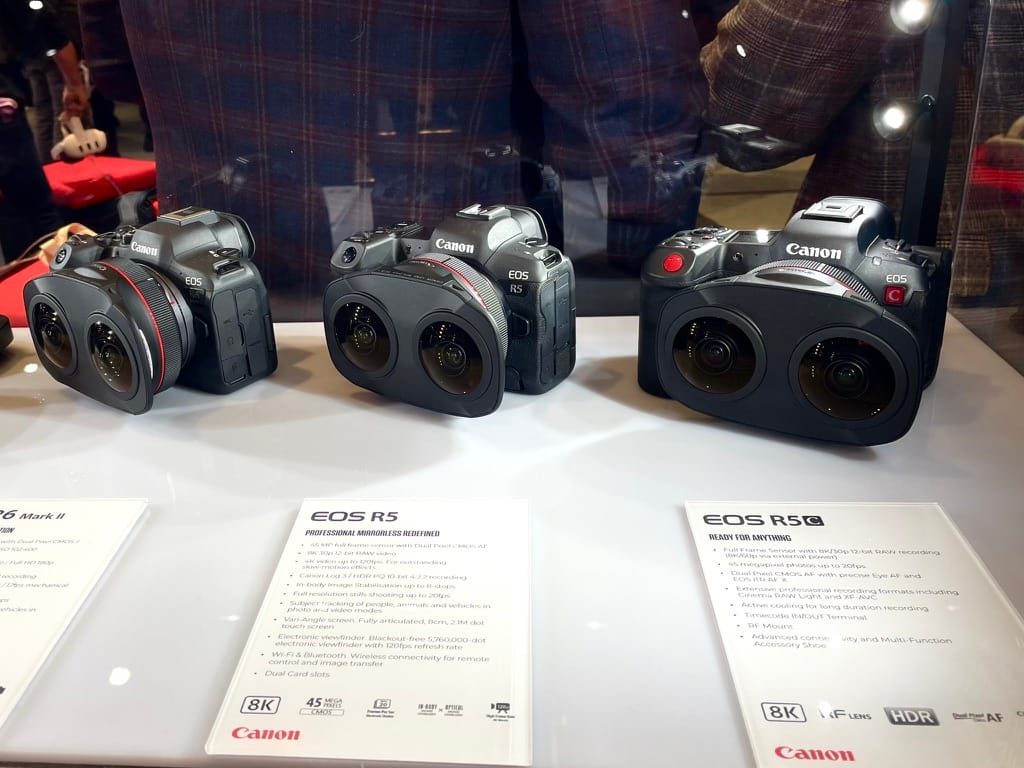
It all began at ISE 2024. Canon was the very first stand we encountered, and it stopped us dead in our tracks. Initially, we were captivated by their PTZ cameras (more on those in a future post, they were brilliant), but then we saw it. A lens that looks like a pair of alien eyes.

(Author: Jiří Travěnec, Igor Kuba)
It all began at ISE 2024. Canon was the very first stand we encountered, and it stopped us dead in our tracks. Initially, we were captivated by their PTZ cameras (more on those in a future post, they were brilliant), but then we saw it. A lens that looks like a pair of alien eyes. We had no idea Canon had released such a thing, and at that moment, it was clear we had to try it out.
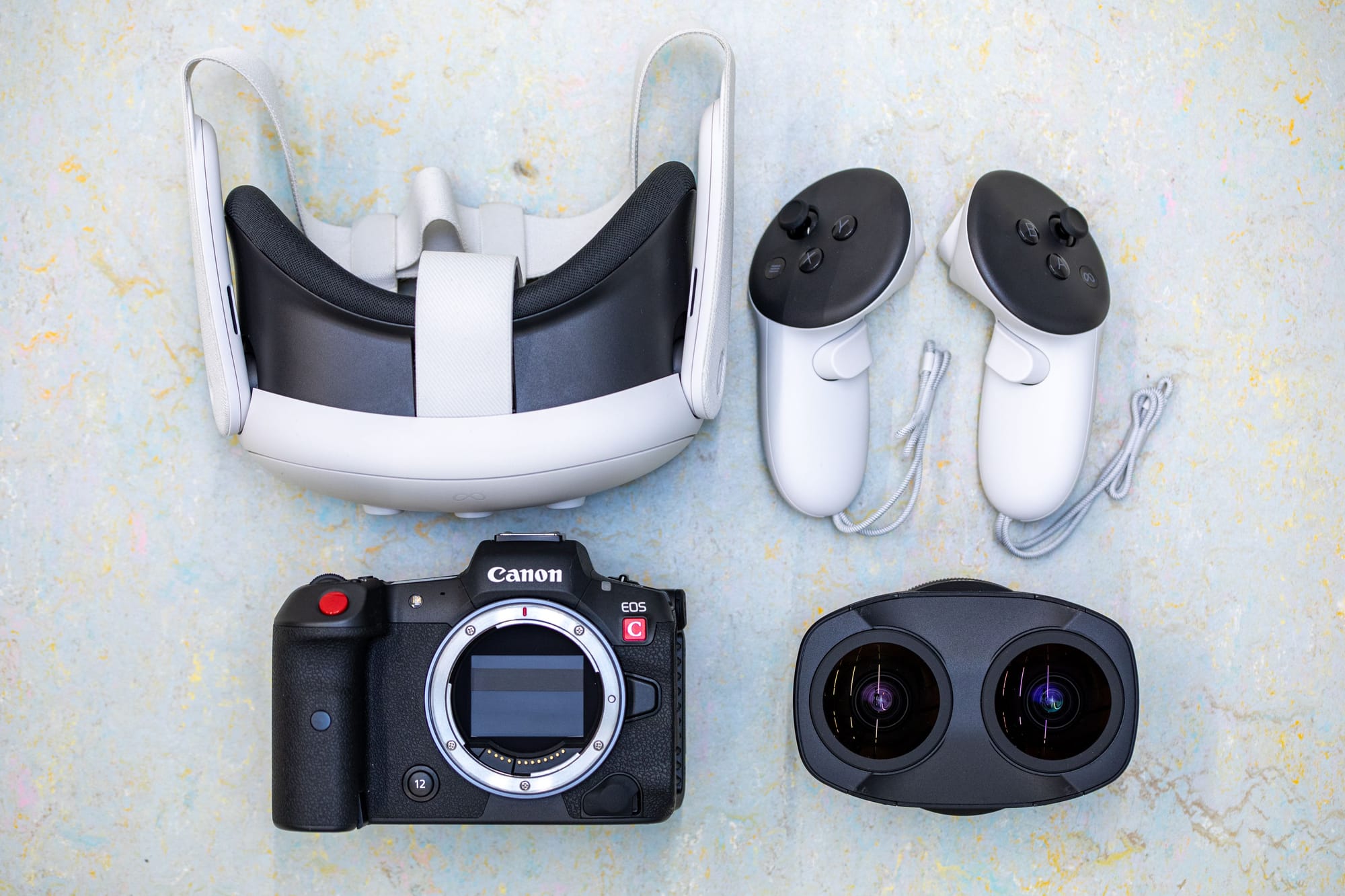
The arrangement with Canon Czech Republic was excellent. They loaned us the kit for two weeks, and the entire process was professional and seamless. The package contained this double-eyed curiosity: the RF 5.2mm f/2.8 L Dual Fisheye lens, paired with a Canon EOS R5 C body.
First Impressions: What Do We Do With It?
To be honest, we were desperate to try it, but we didn't quite know what we were letting ourselves in for or what it would actually be good for. But for those fourteen days, we prepared several scenarios and reached for the camera at every spare moment.
We first took the camera into the sterile environment of a real operating theatre. For spatial orientation, monitoring the procedure, and observing surgical collaboration in VR, it was great. However, given the size of the surgical field, we concluded it wasn't quite the right fit. Surgery typically requires fine detail, which a wide-angle VR lens simply isn't built for. Standard production still wins there. But it gave us another idea.
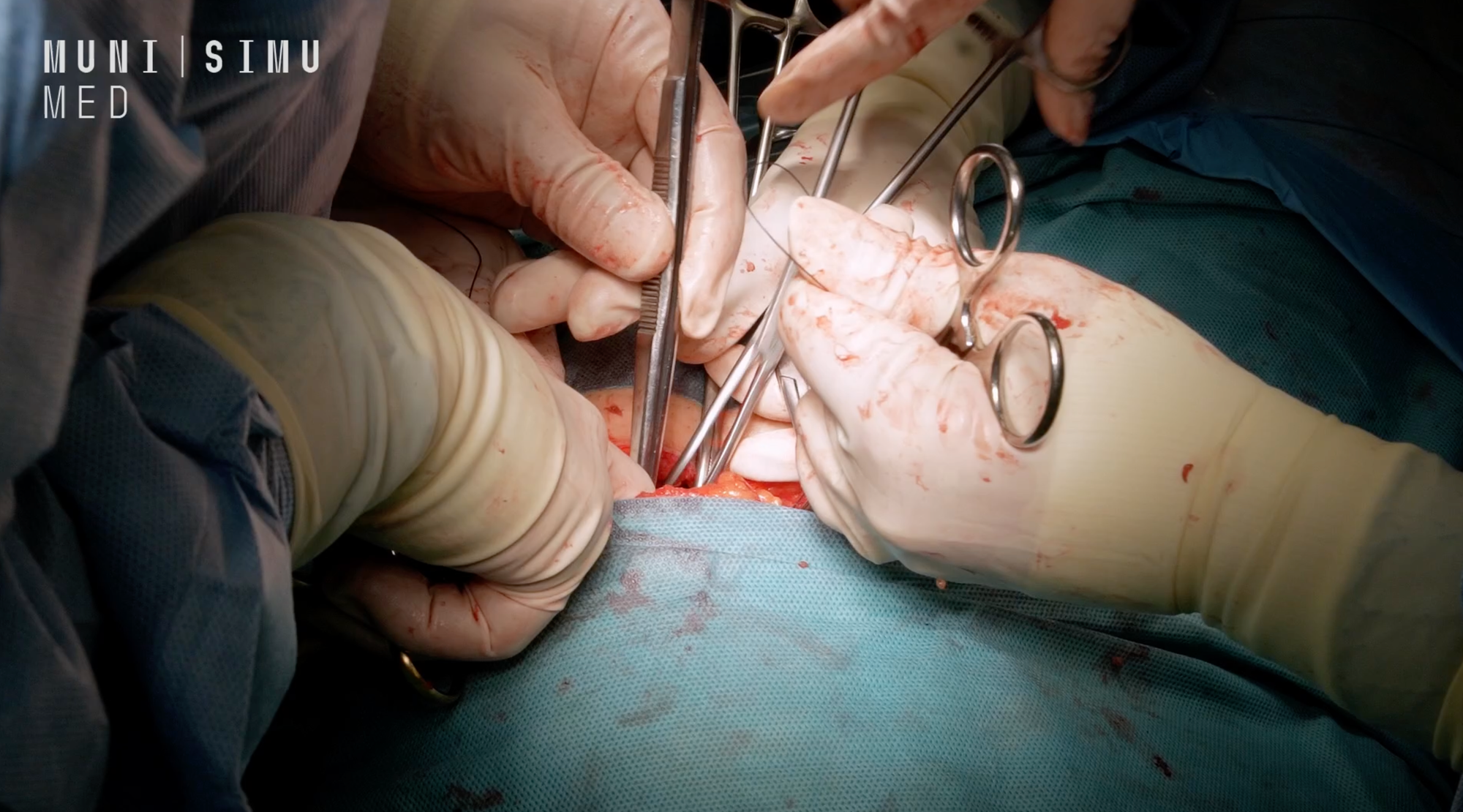
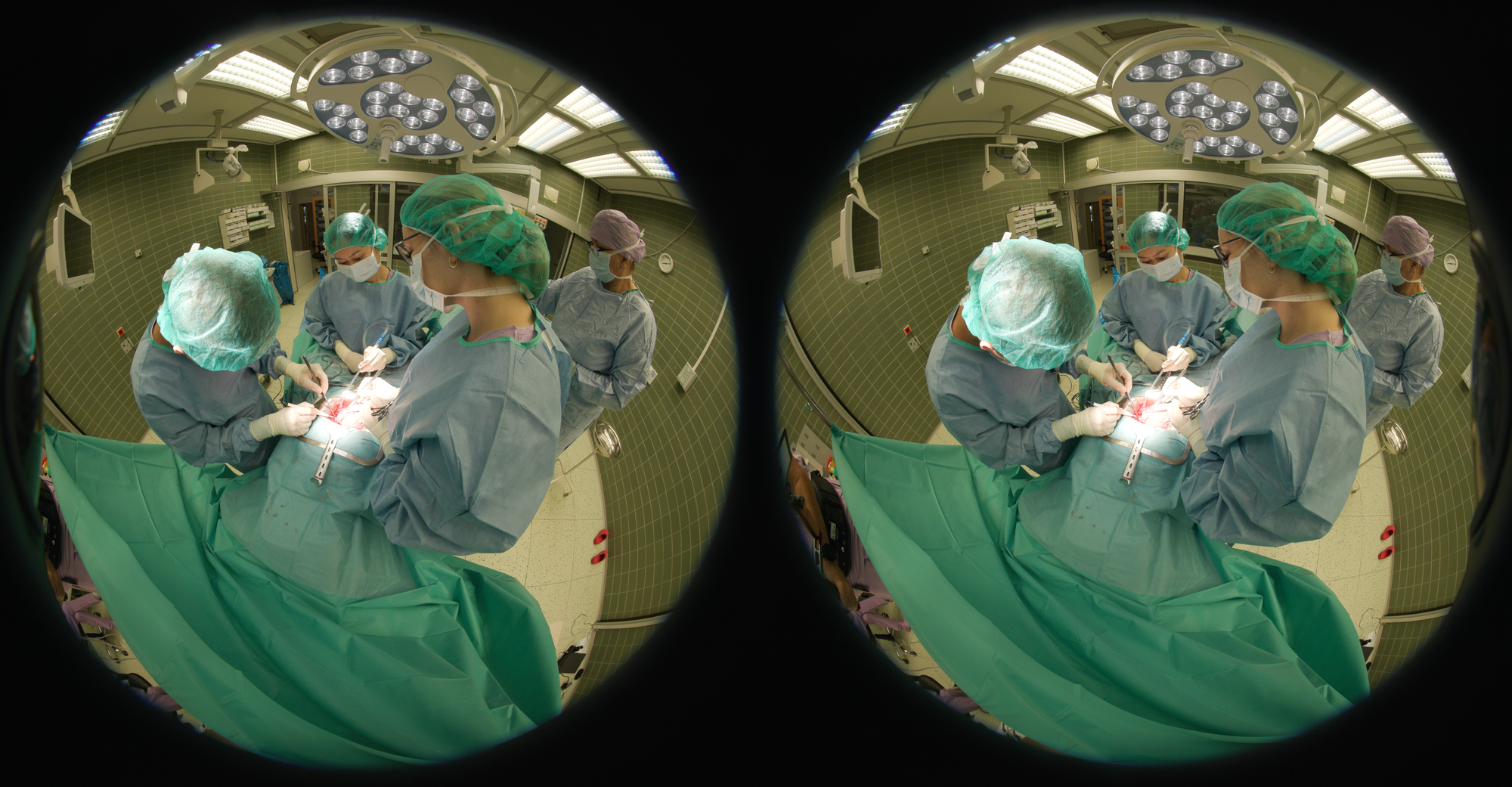
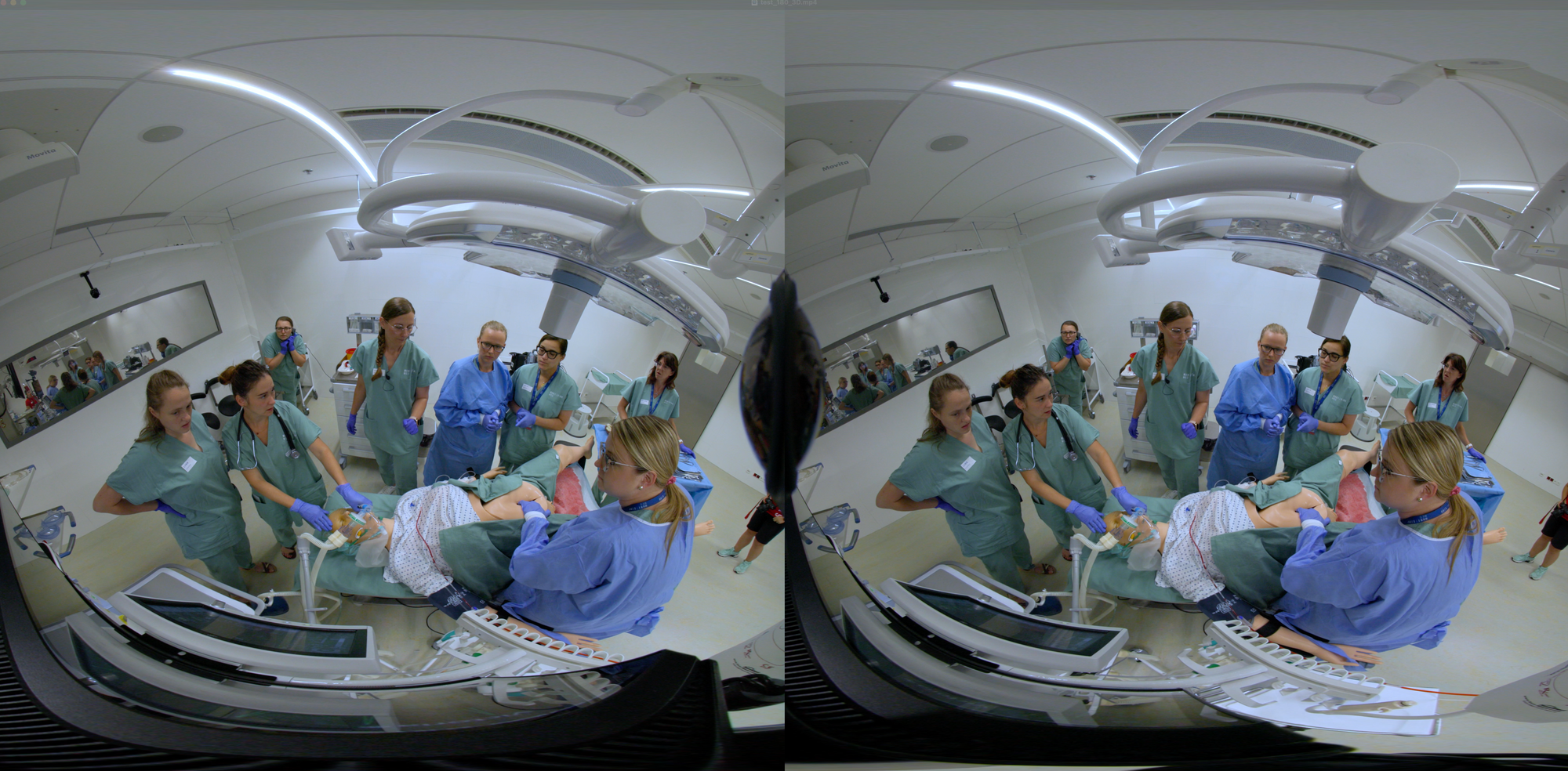
The different between what you probably want to see and what statically mounted VR lens give you.
We took the lens to our simulated operating theatre during a dry run of one of our courses. After searching for the perfect spot, we eventually mounted the camera above the vital signs monitor attached to the anaesthetic machine. The result was fantastic! When you put on the VR headset, you are instantly transported into the heart of the action. People are rushing around you, you see the interaction of the entire team, the patient is right below you, and the participants' hands are literally right in front of your eyes. Incidentally, this camera position proved so effective that we’ve started using it for our fixed SIMStation cameras as well.
Technical Specs: The Kit in Practice
To get usable output from a dual lens, the camera body requires high processing power and resolution. We used the Canon EOS R5 C, which was our first experience with a device of this class. The main benefit here is the ability to record in 8K resolution, which proved essential for achieving sufficient image quality in a virtual reality environment.
Lens Parameters | ||
|---|---|---|
Focal Length | 5.2 mm | |
Aperture | f/2.8 | |
Construction | L-series (Professional range) | |
Field of View | 190° | |
Body Parameters | |
|---|---|
Sensor | Full-frame CMOS (45 Mpix) |
Video Resolution | Up to 8K (8192 x 4320) |
8K Frame Rate | 29.97 / 25 / 24 / 50* / 60* FPS (*with ext. power) |
Recording Format | Cinema RAW Light, XF-AVC, HEVC (H.265) |
Cooling | Active fan for unlimited recording |
Bring a Substantial Memory Card
If you think your standard card will suffice, think again. The EOS R5 C combined with a VR lens generates mountains of data. When shooting at 8192 x 4320 (nearly 8K) at 29.97 FPS in the H.265 codec, expect 30 minutes of footage to consume roughly 100 GB. And that’s just compressed video; RAW is an entirely different universe.
Post-production and Headset Display
The camera output looks like two circular images side-by-side. To make it viewable in a headset, the image must undergo a process known as equirectangular projection (converting circular footage into a square/rectangular format). We tested the results on our Meta Quest 2 headset.
This is where the 8K resolution becomes vital:
- The final file had a resolution of 8192 x 4096.
- This translates to 4096 x 4096 pixels per eye.
- Since this resolution is stretched over a massive 190° field of view, every pixel counts.
Comparing the options reveals an interesting fact:
- Canon R5 / R5 C: Thanks to 8K, it provides enough data for the image to look sharp and natural in the headset.
- Canon R6: It has 4K output, which sounds good for a TV, but in VR, it would feel like looking through a plastic bag. Those few pixels simply aren't enough for such a large area.
- Meta Quest 2: Has a resolution of approximately 1832 x 1920 per eye. Even though the Canon video has high resolution, once stretched over the headset's full field of view, it is essentially "just enough" for the Quest 2 displays. 8K resolution is the absolute minimum required for the experience to be believable and clear, rather than a needless luxury.
What’s Next?
It was a fascinating glimpse into a world that isn't usually filmed this way. The Canon RF 5.2mm Dual Fisheye isn't for everyday use, but if you want to create immersive content, it is currently an exceptionally interesting path.
I would dearly love to see a setup where we use the VR lens on a body and headset that allows for real-time 3D monitoring from a control room. That would be absolutely brilliant and utterly revolutionary for monitoring simulations!
Once again, many thanks to Canon CZ s.r.o. for the loan. Next time, we'll take a look at those PTZ cameras, as I enjoyed those in the simulations perhaps even more!
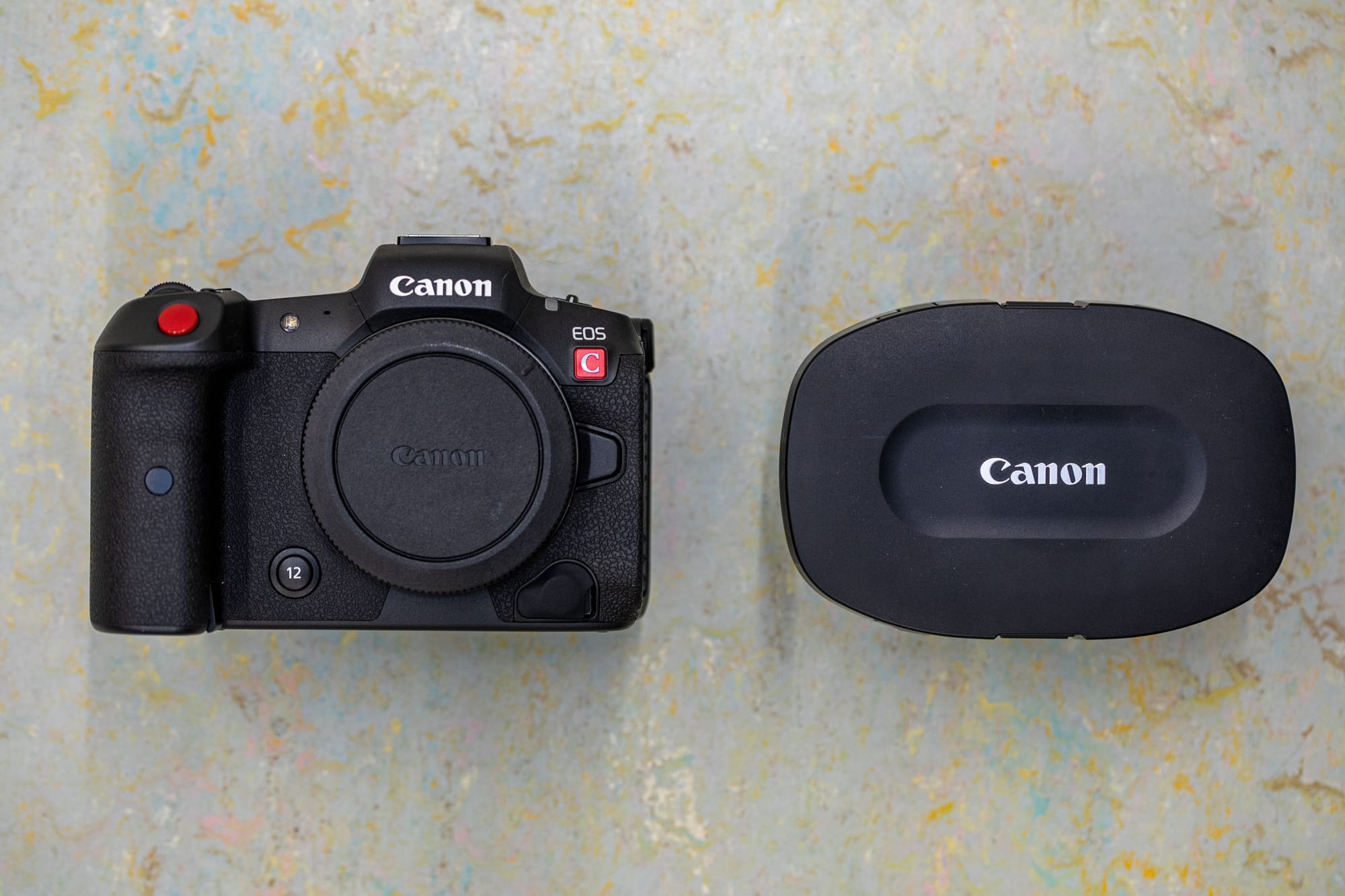
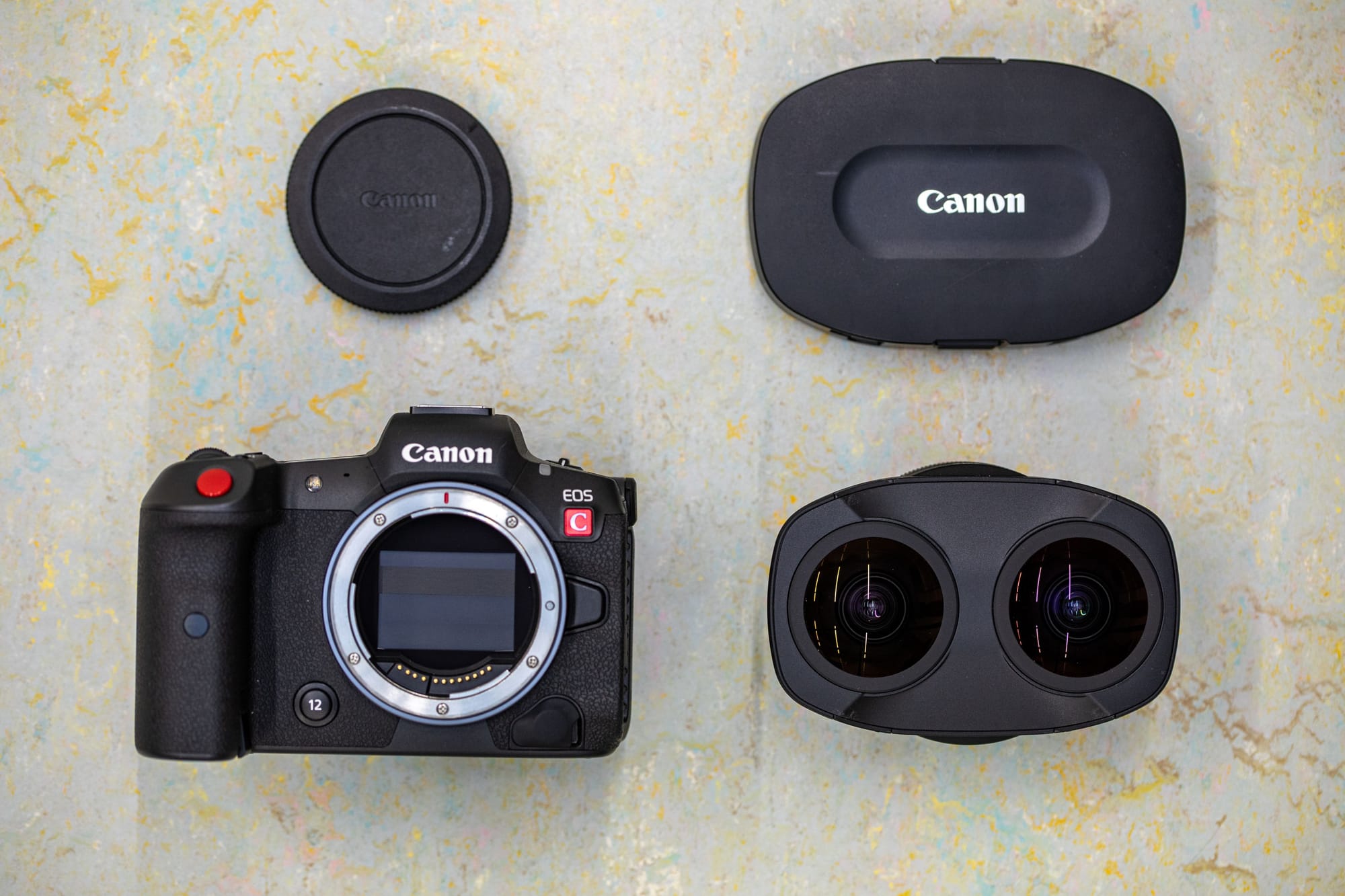
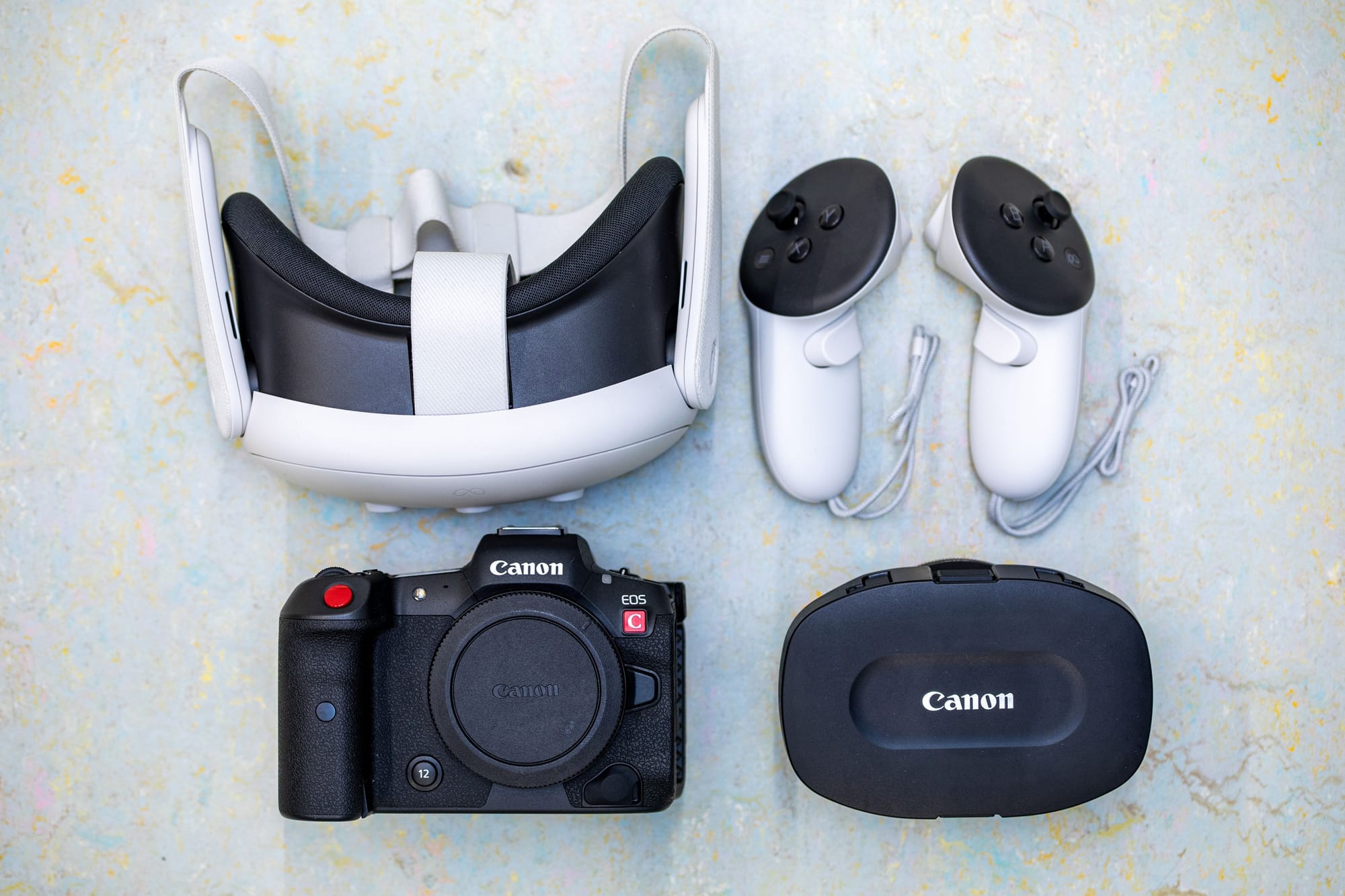
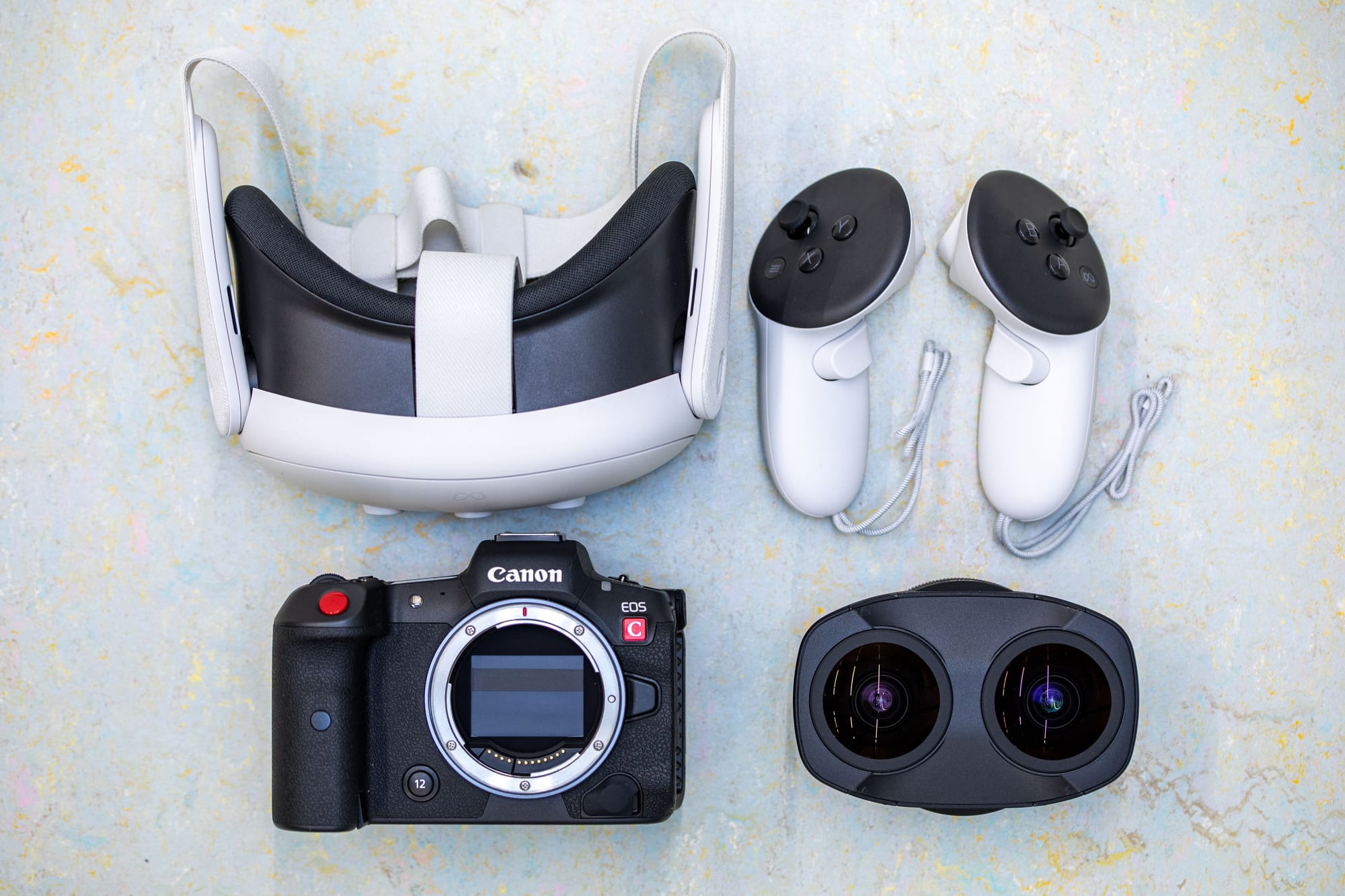
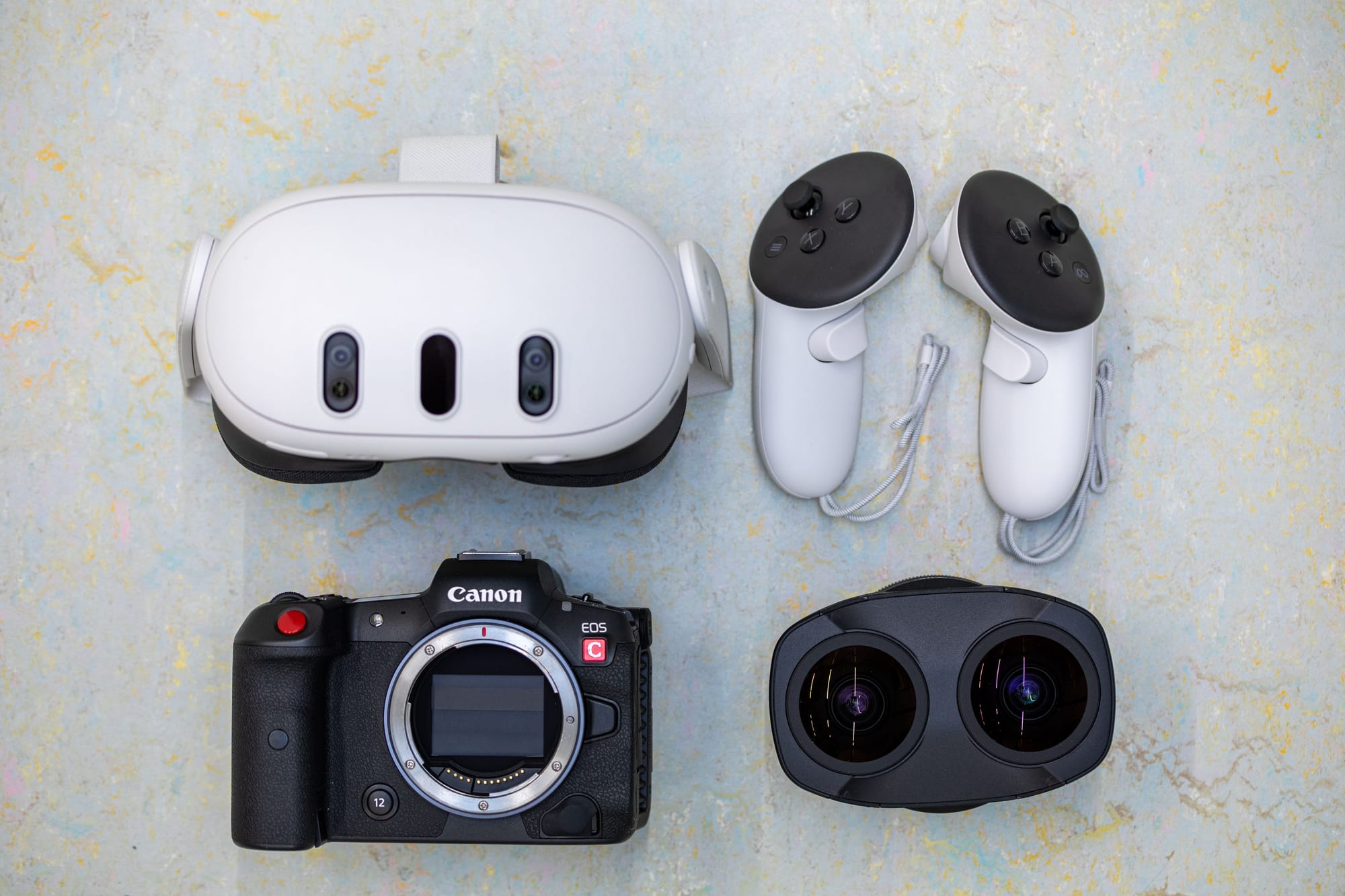
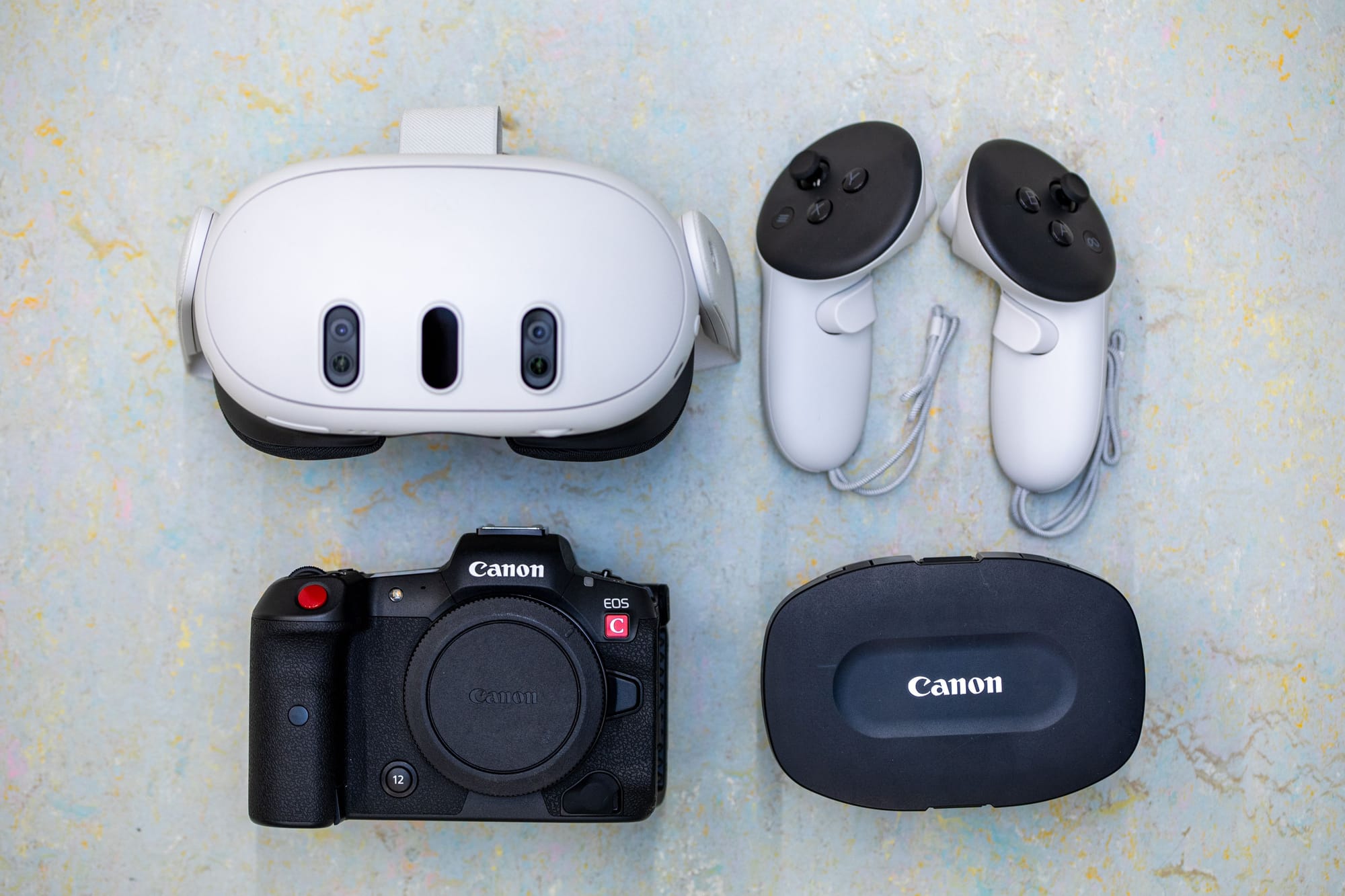
Canon RF 5.2mm f/2.8 L Dual Fisheye, Canon R5C, Meta Quest 2